
Different Colors of the Red Squirrel Sciurus Vulgaris
The Eurasian or Red Squirrel (Sciurus Vulgaris) is a native species found in Europe and parts of Asia, including Croatia. The term "red squirrel" refers to the species, not the fur color, which can vary from red, orange, reddish-brown, light brown, dark brown, black, gray, and very rarely white.
The Eurasian squirrel can reach a body length of 18 to 24 cm, with a tail usually slightly longer, ranging from 14 to 24 cm.
They are recognizable by their dense reddish-brown fur on their backs, while their belly and chest are white. The fur color changes with the seasons—lighter and more prominently red in summer, darker and more grayish in winter. In winter, long tufts grow on their ears, while in summer they look like small flying bears after the tufts fall off. :-)
Some red squirrels have black or dark brown fur on their backs, while others may have a pale, almost gray color. Additionally, some populations of red squirrels, especially those in northern Europe, have lighter shades of fur in winter, with their fur turning white or gray-white for better camouflage in the snow.
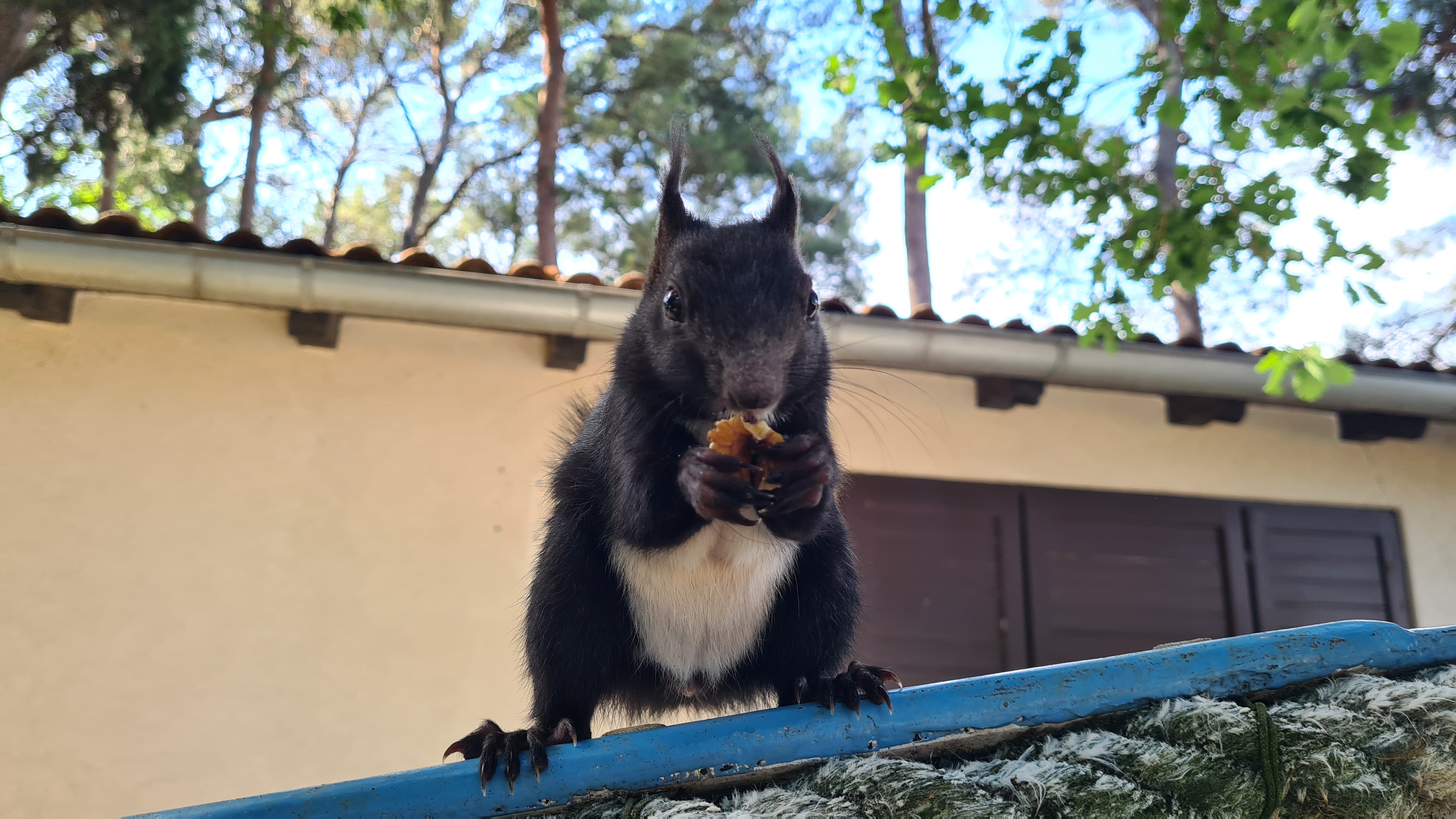
Black and dark brown red squirrels are most commonly found in southern Europe, including Croatia, Slovenia, and Austria.
Light brown and reddish-brown squirrels are mainly found in central Europe, including Croatia, while in Germany, red and orange ones predominate.
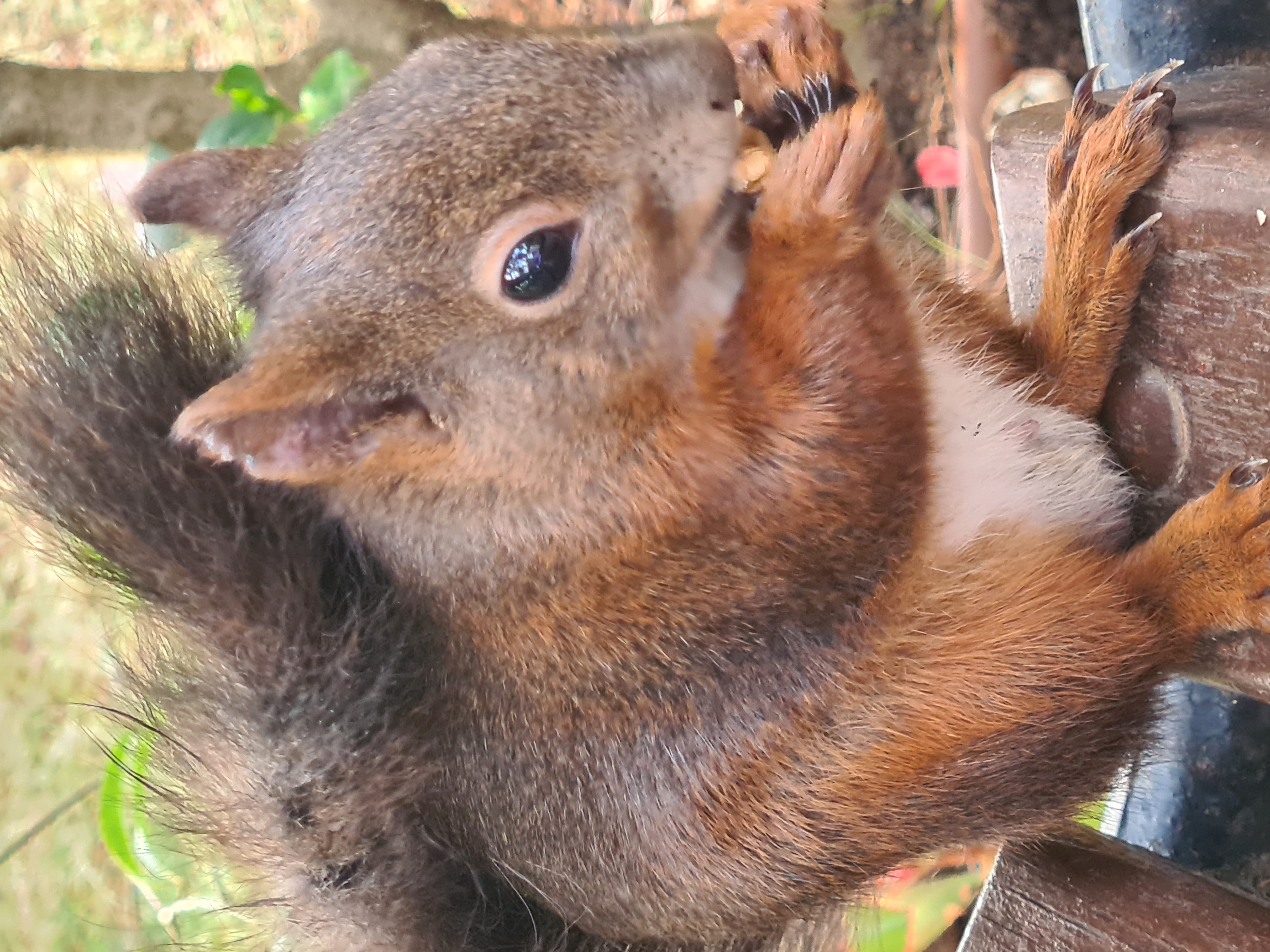
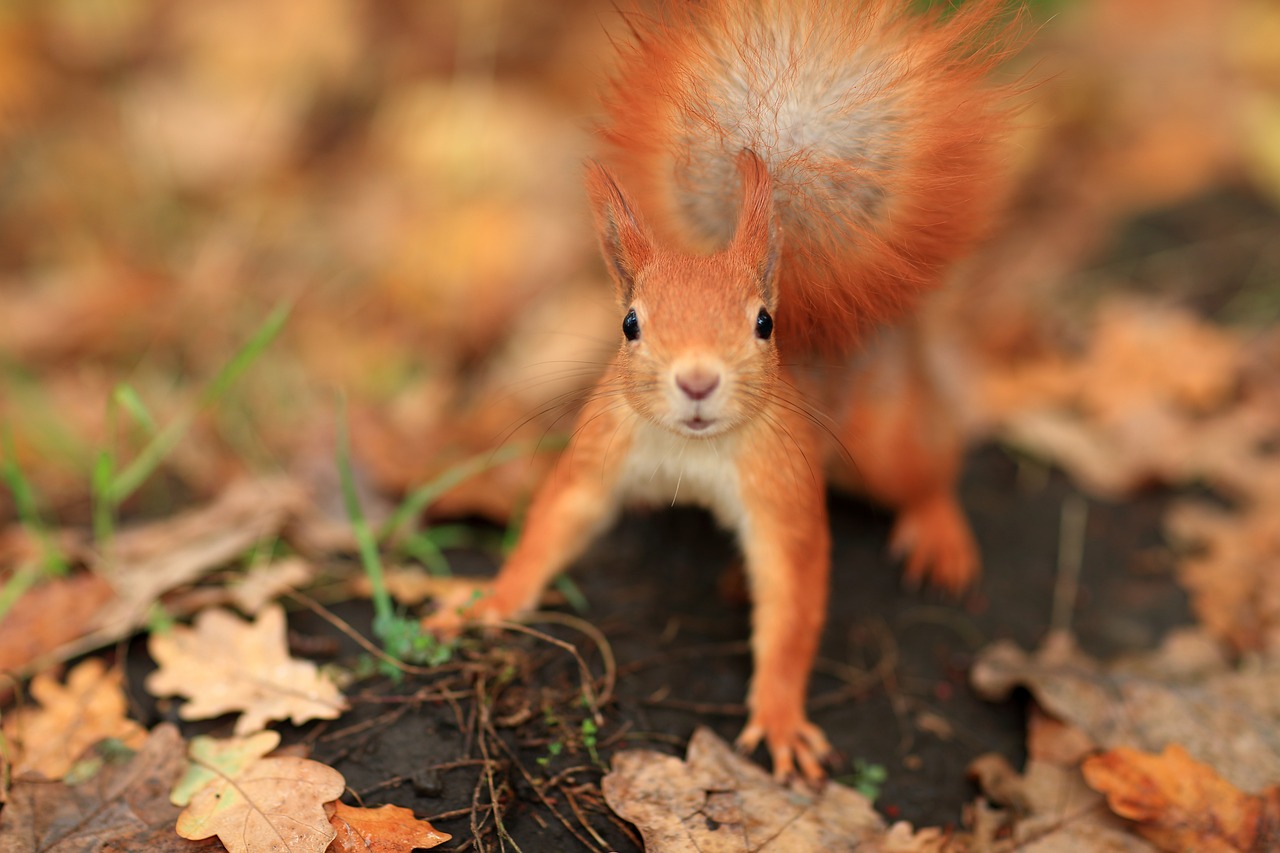
In Germany and central Europe, red and orange squirrels are prevalent, though there are also brown and black ones.
Orange-white and orange-light gray squirrels mainly live in northern Europe and Russia.
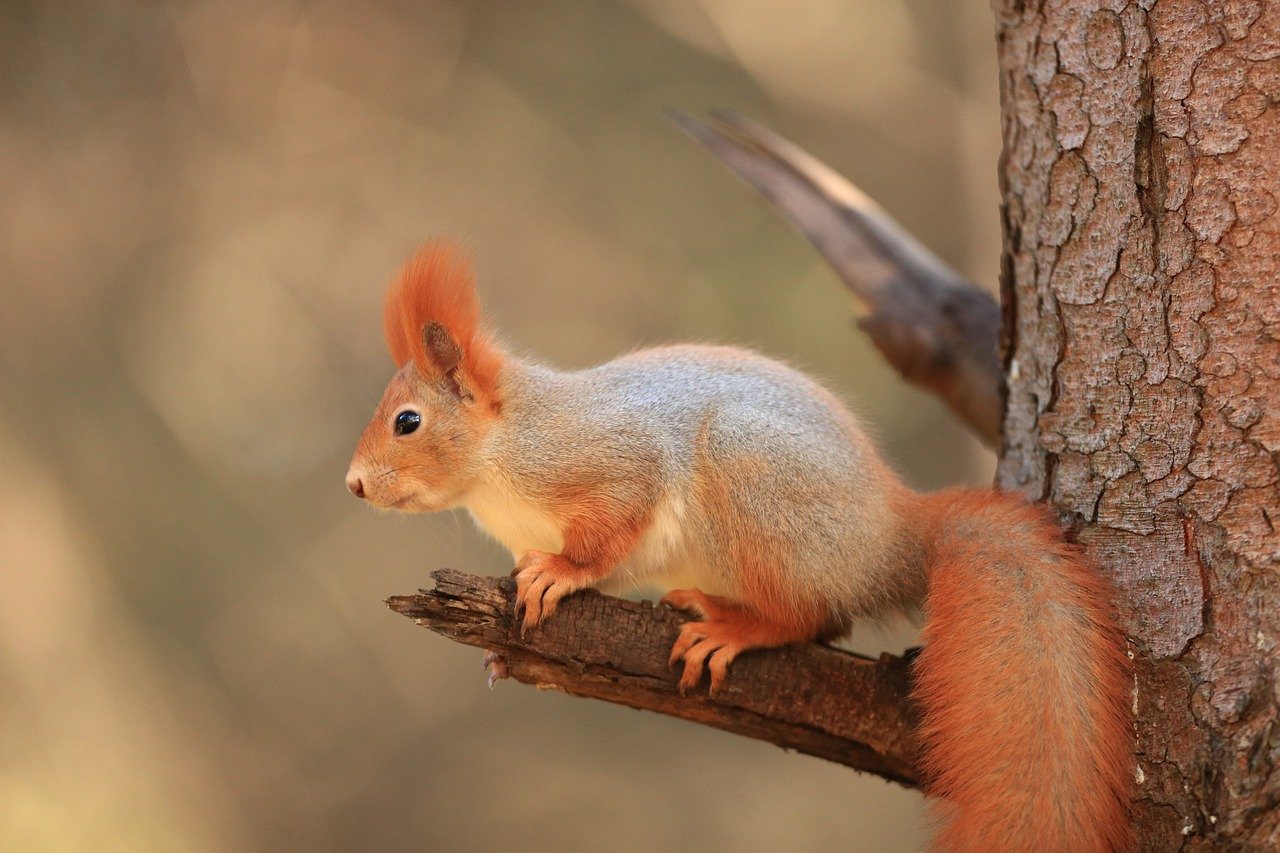
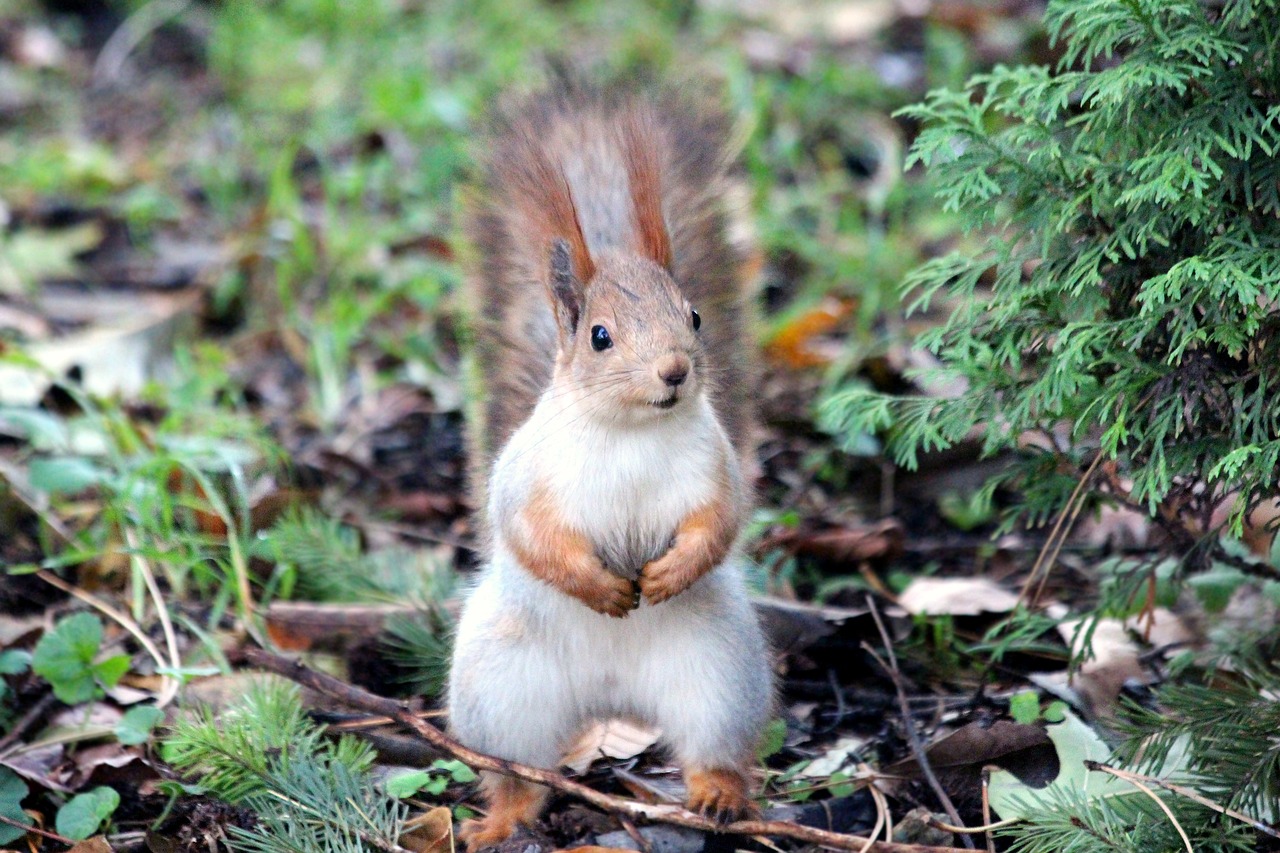
The further north you go, the lighter the squirrels become.
White red squirrels are very rare and result from a genetic disorder. This genetic variation causes a lack of melanin pigment in the fur, eyes, and skin, resulting in whiteness.
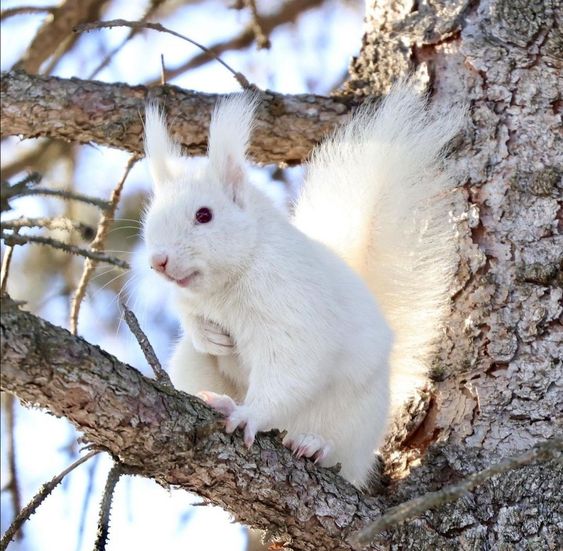
Image source: Pinterest
Albino red squirrels, like other albino animals, are at increased risk of sunburn and other skin problems due to the lack of melanin protection. Also, their lack of natural camouflage can make them easier prey for predators, further increasing their risk of attack.
Despite this, albino red squirrels are rare and attract people's attention due to their unusual whiteness.
Red squirrels can change the color of their fur depending on the season. During summer, their fur is usually lighter and redder, while in winter it can darken. This fur color change helps them camouflage in their environment throughout the seasons. However, don’t be surprised if you see a red squirrel with dark fur during summer or light-colored fur during winter, as this depends on genetic and environmental factors.
Red squirrels have tufts on their ears during winter, which serve as additional insulation against the cold. However, during summer, the tufts fall off, as the temperatures are warmer, and they do not need the extra insulation, making them resemble “little flying bears”!
ABOUT US
HEALTH CENTER HARMONY
Association for the Protection of Health,
Nature and Red Squirrels
POREČ - ISTRIA
We have been active since 2006.
© Health Center Harmony 2006-2026
NOTE: All information provided on this page is educational. For specific needs concerning squirrels, please consult a veterinarian or a wildlife protection center.
95% of the photos are taken by Conny & Dražen, with the remaining images by Graziella Mureta and Geert Weggen and licensed photos from Pixabay, Stock, and Shutterstock.