
The Importance of Proper Cages for Squirrel Rehabilitation
Incubator for Baby Squirrels (up to 5 weeks old): Baby squirrels younger than 5 weeks require special care and warmth. At this early stage, an incubator is the optimal choice. The incubator should be small and well-insulated to maintain a stable temperature. Inside the incubator, place soft fabrics like flannel to provide a comfortable place for sleeping and relaxing. Lighting should be dim to create a calm atmosphere. You can read more about how to make an incubator for squirrels HERE.
Cage for Baby Squirrels (5 to 7 weeks old): As squirrels grow, they need to be moved to a larger cage, such as a hamster cage. The recommended cage size is approximately L70 x W40 x H50 cm. Inside the cage, place a small "house" with soft fabrics where the squirrels can nest while they sleep. You can make a house from a cardboard box with a hole in the middle for entry. Place a soft towel covering two-thirds of the cage floor and paper towels for the remaining part. Squirrels usually choose one spot for urination, so it is important to change the paper towels several times a day. When you start introducing small solid foods, ensure there is a water dish inside the cage. Check the pictures and videos at the end of the text to see an example of a cage.
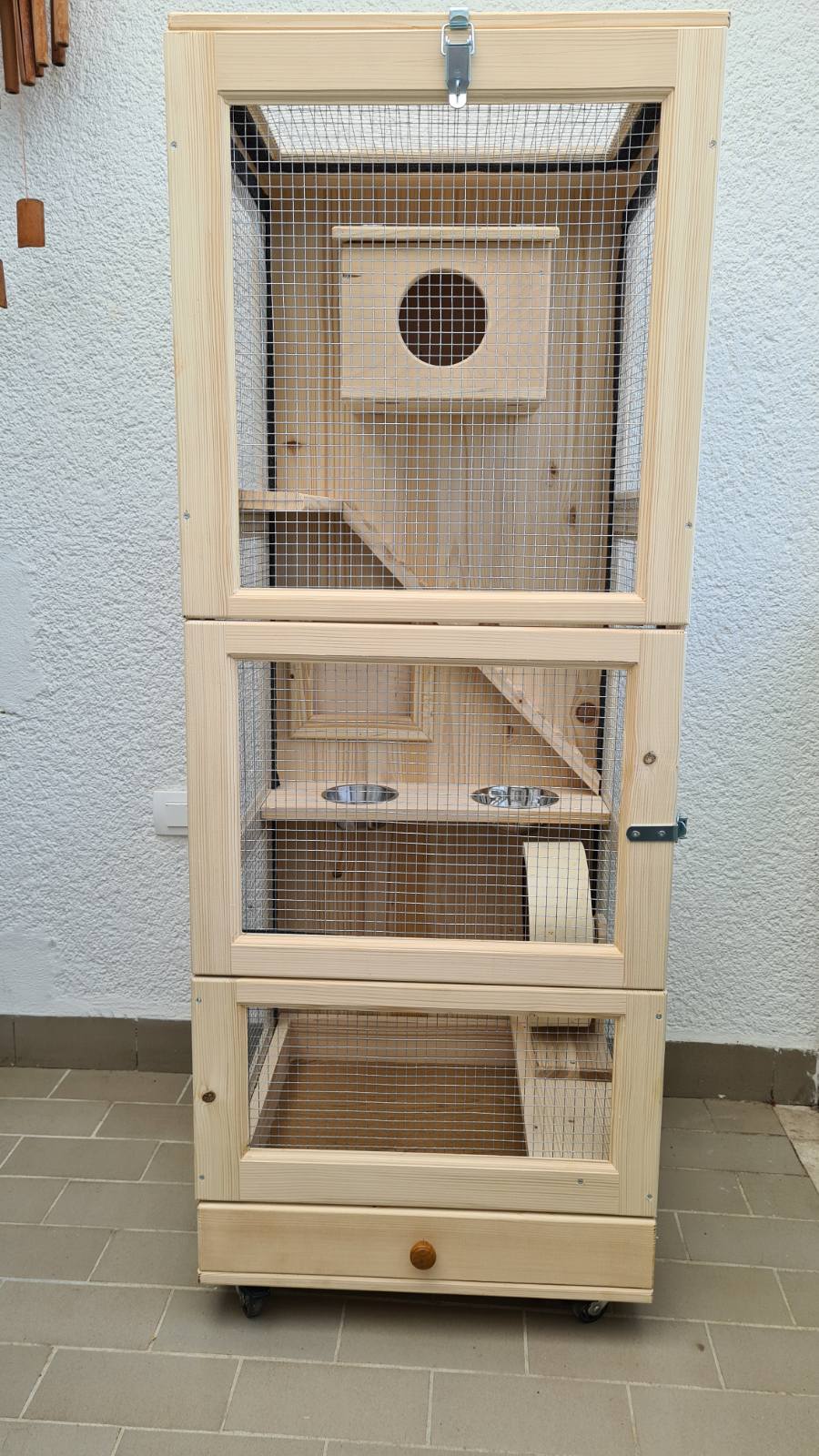
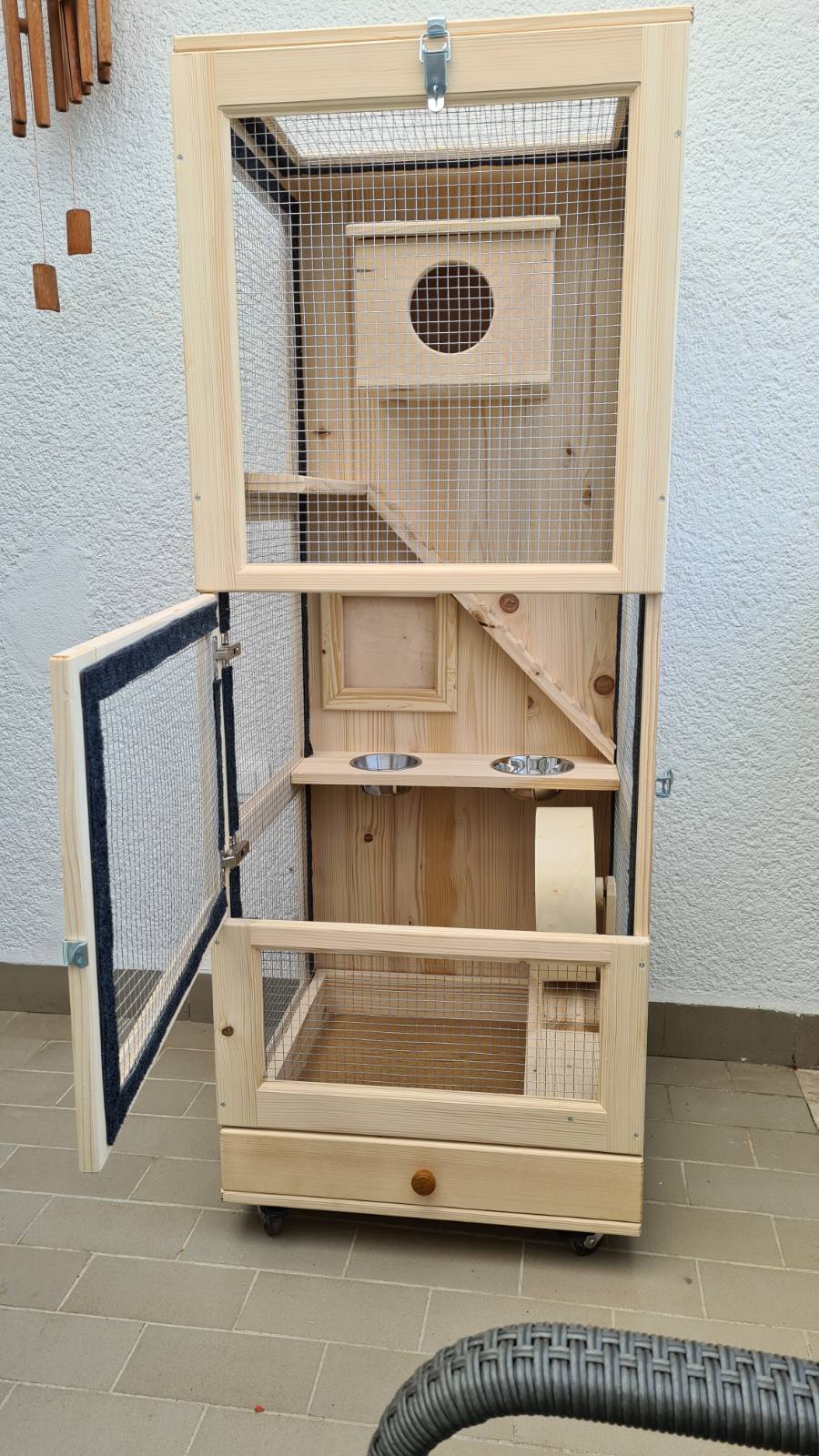
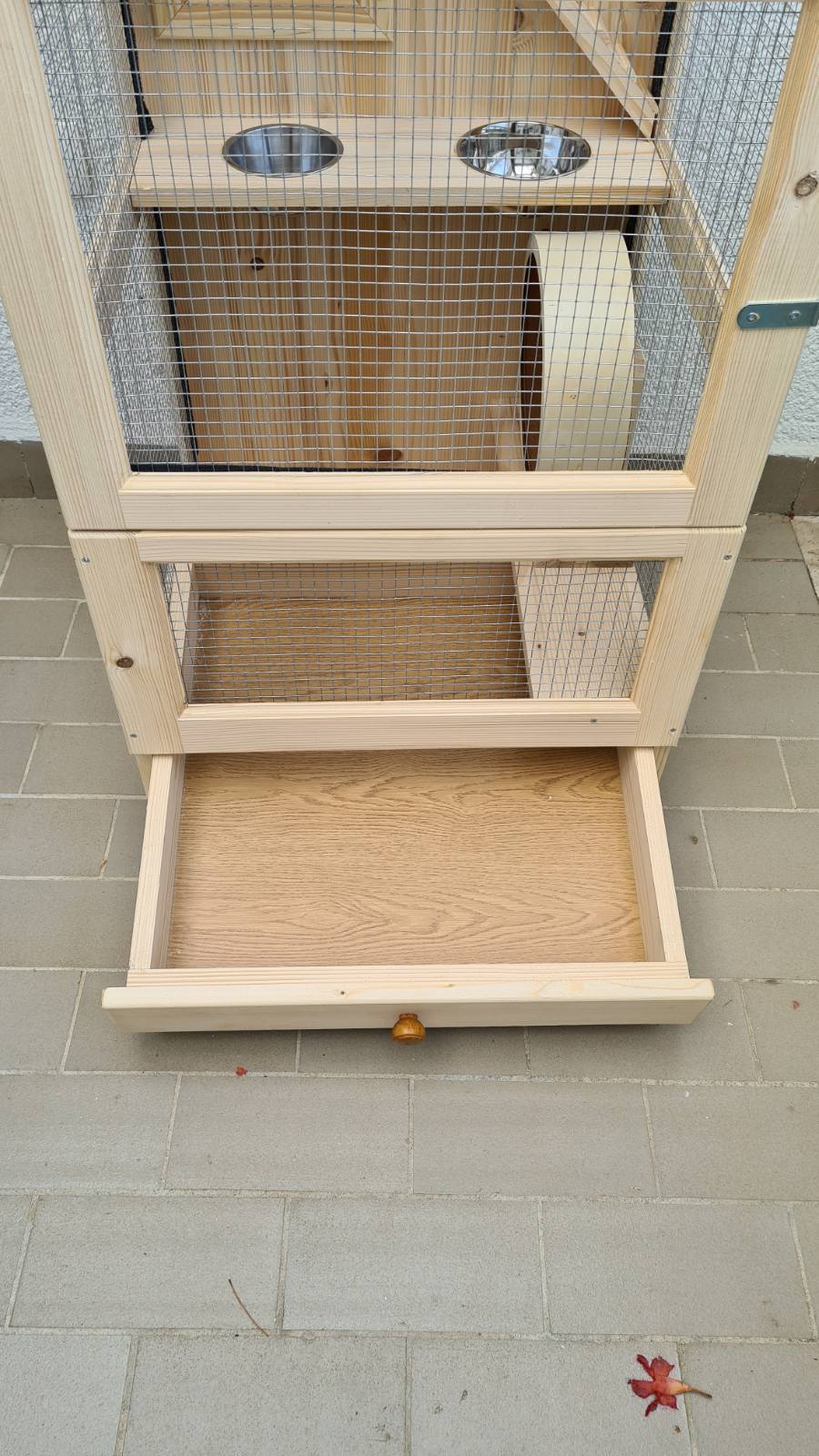
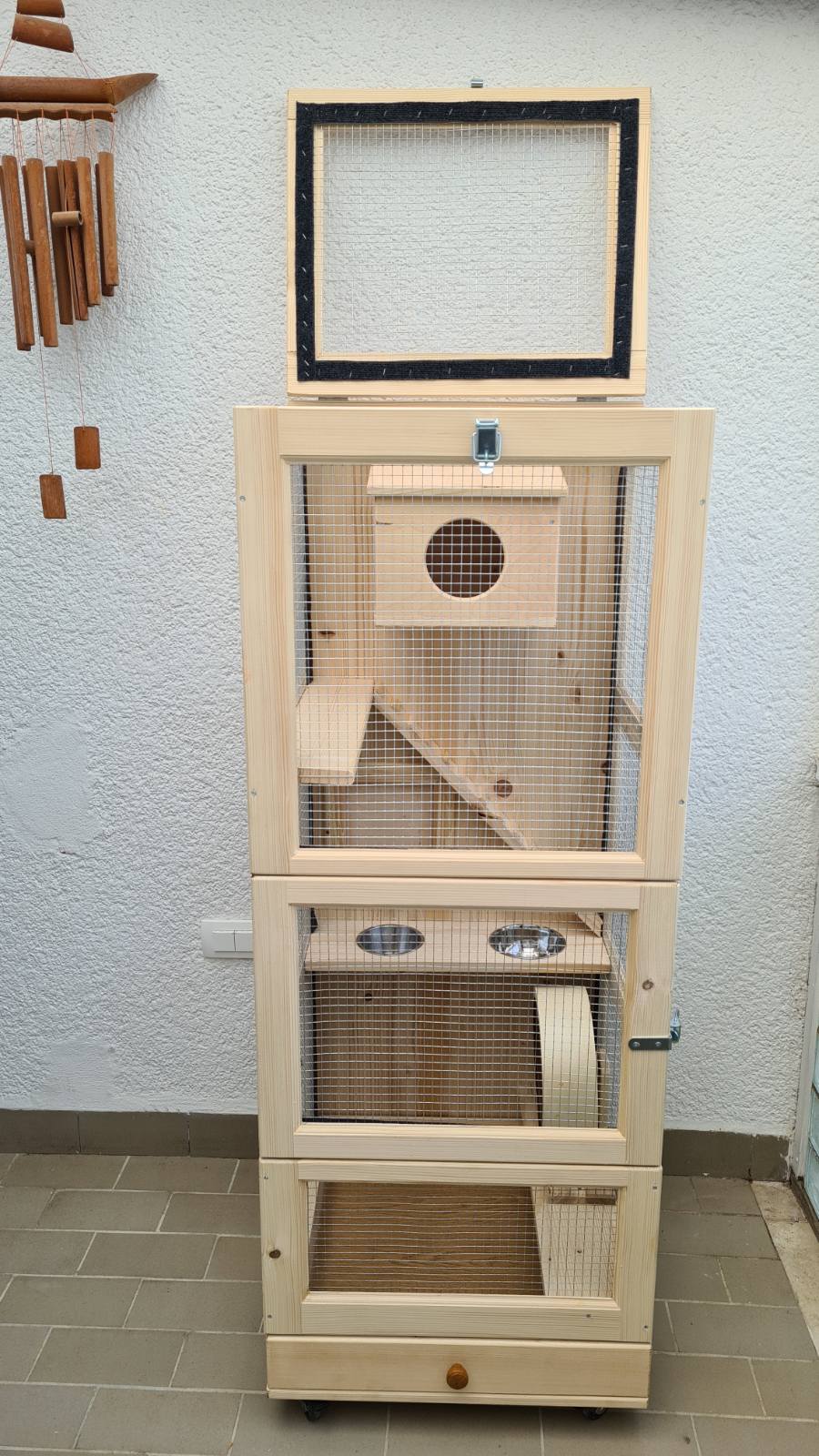
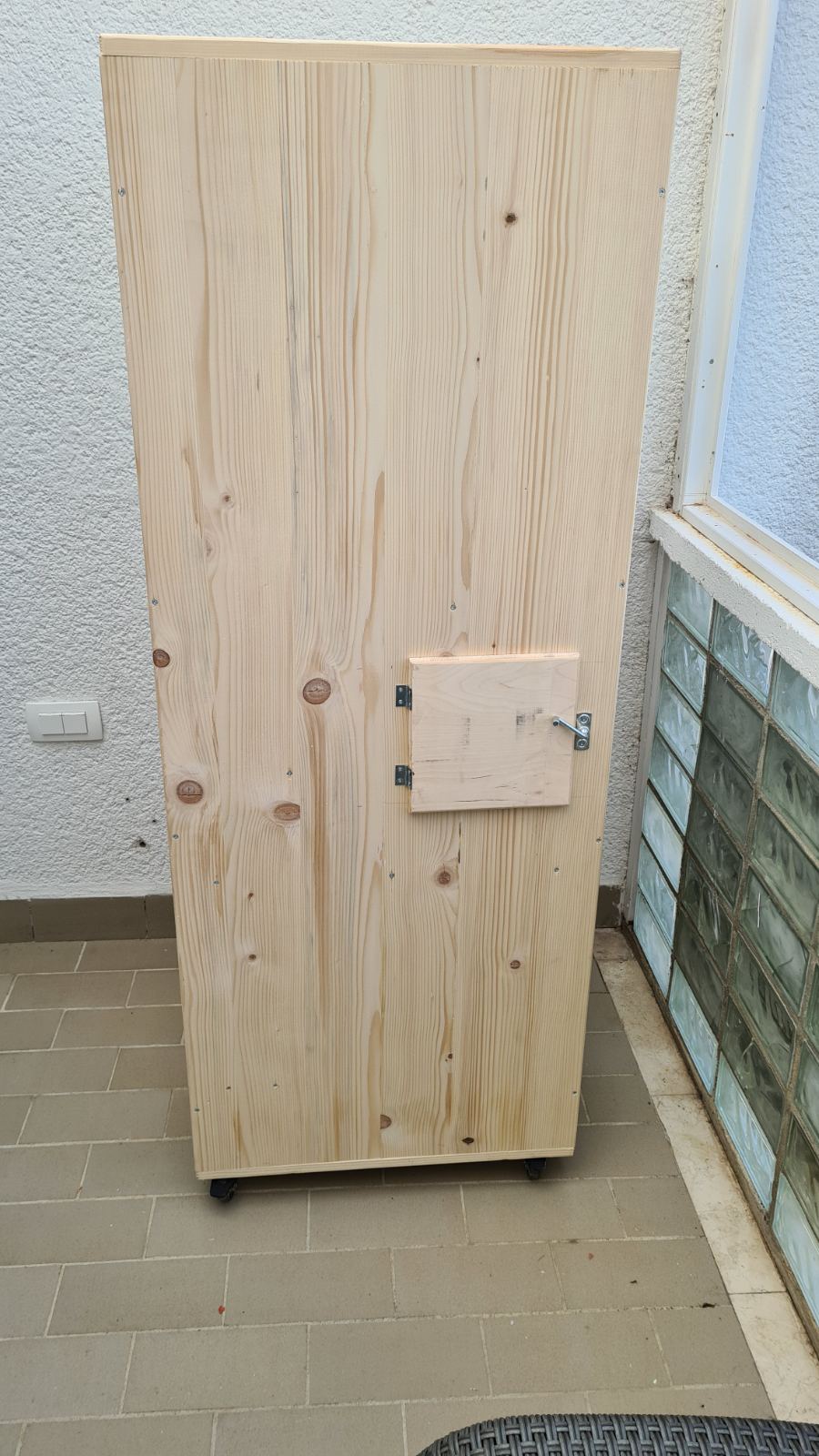
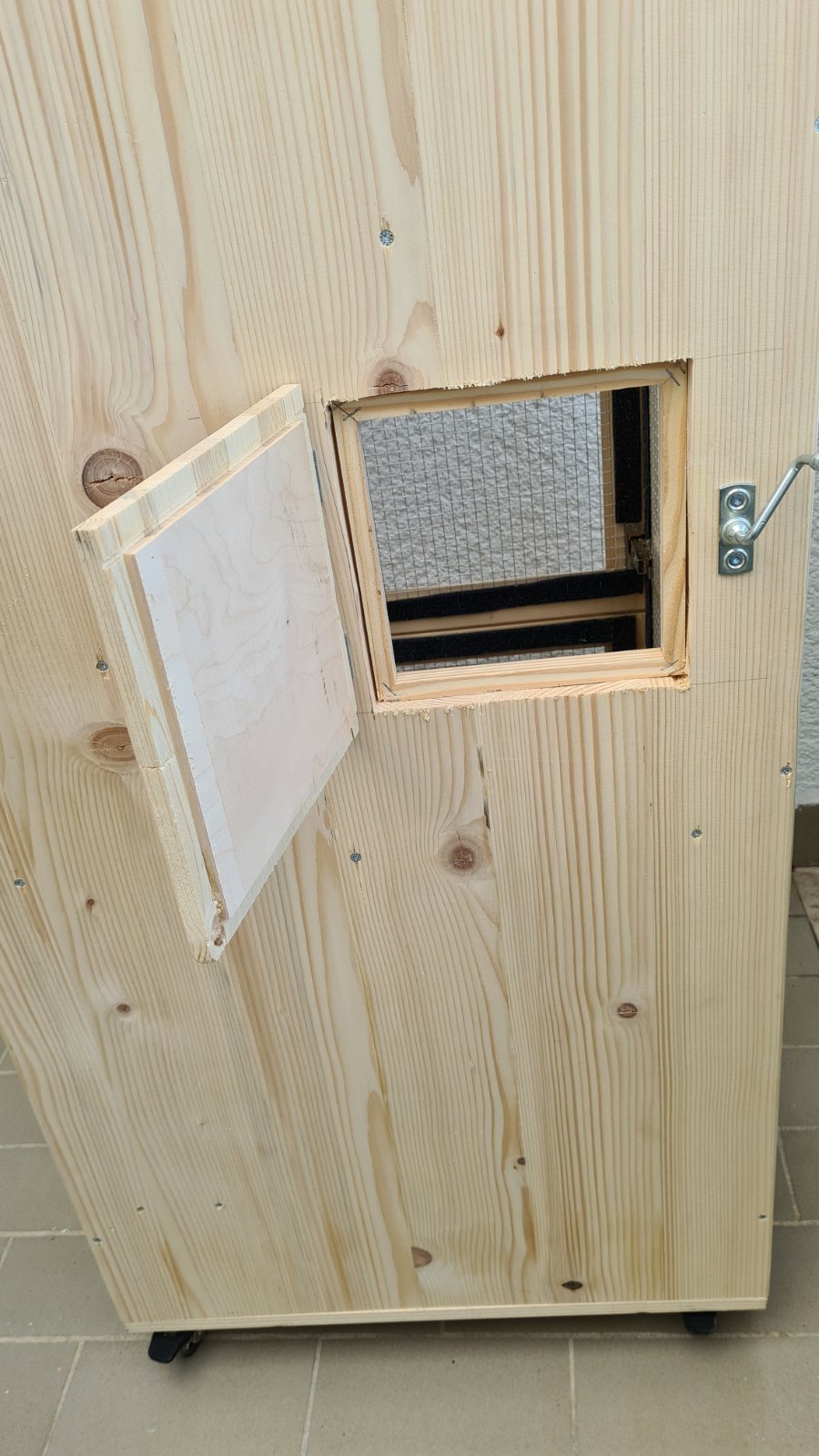
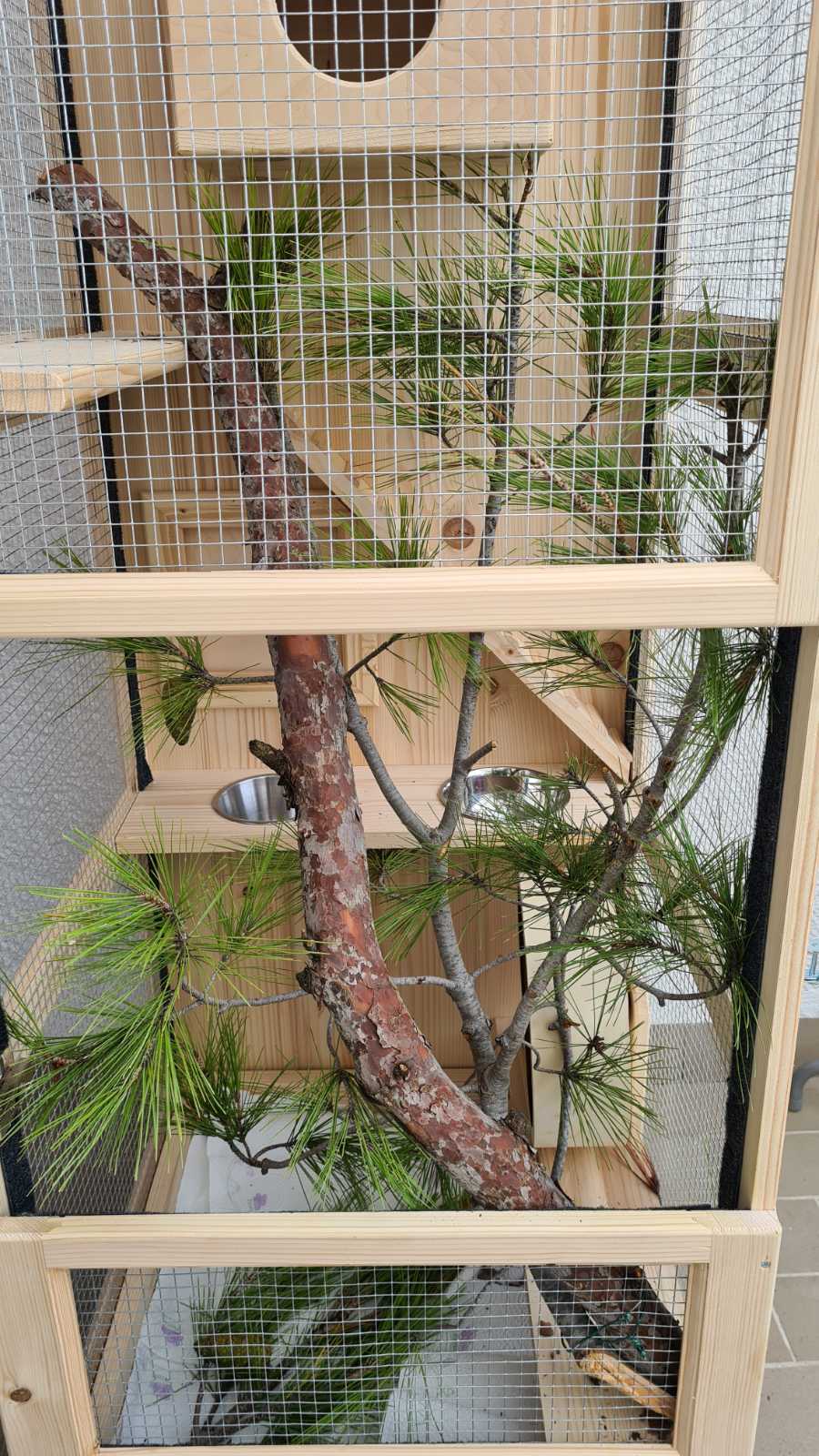
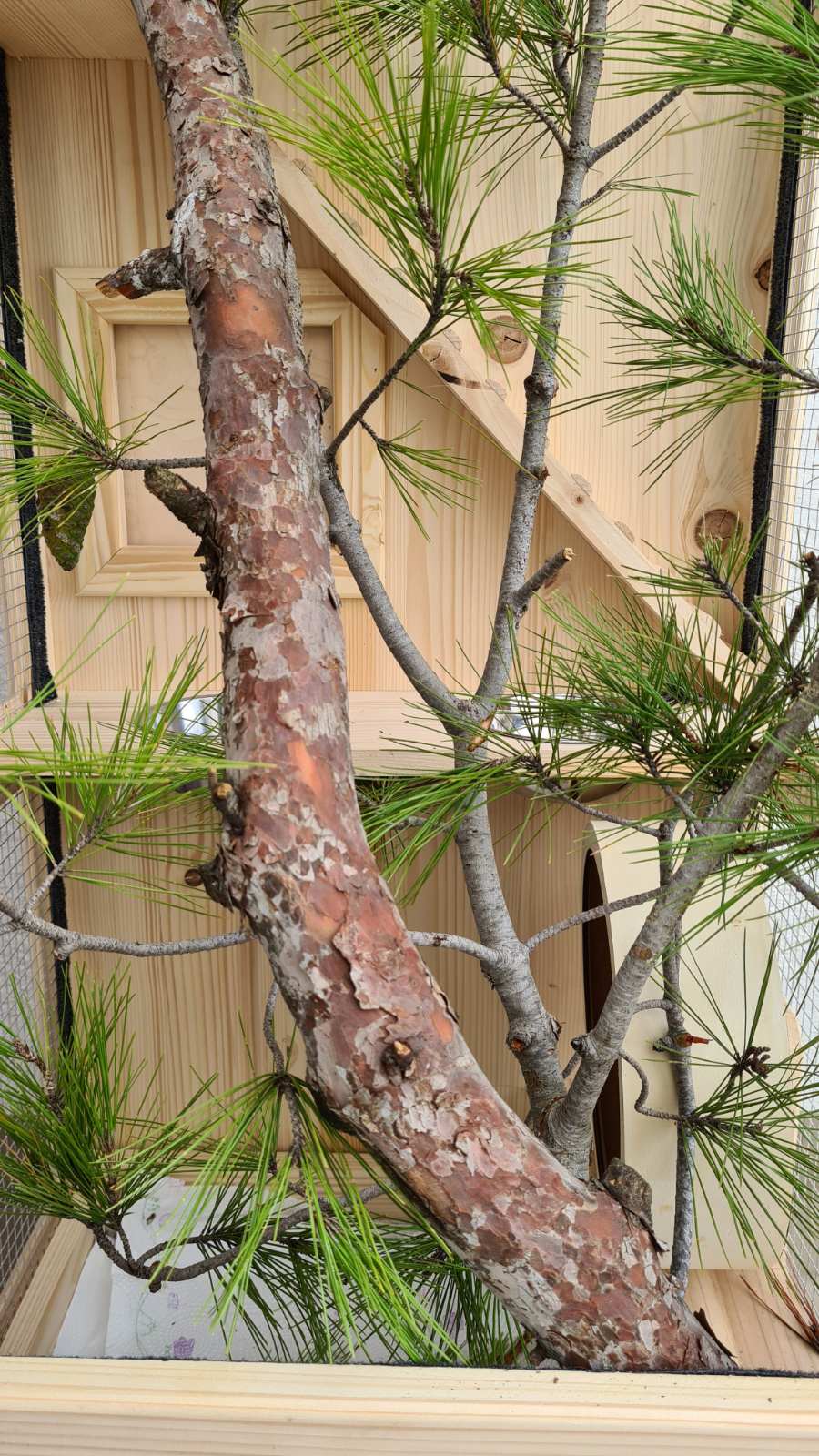
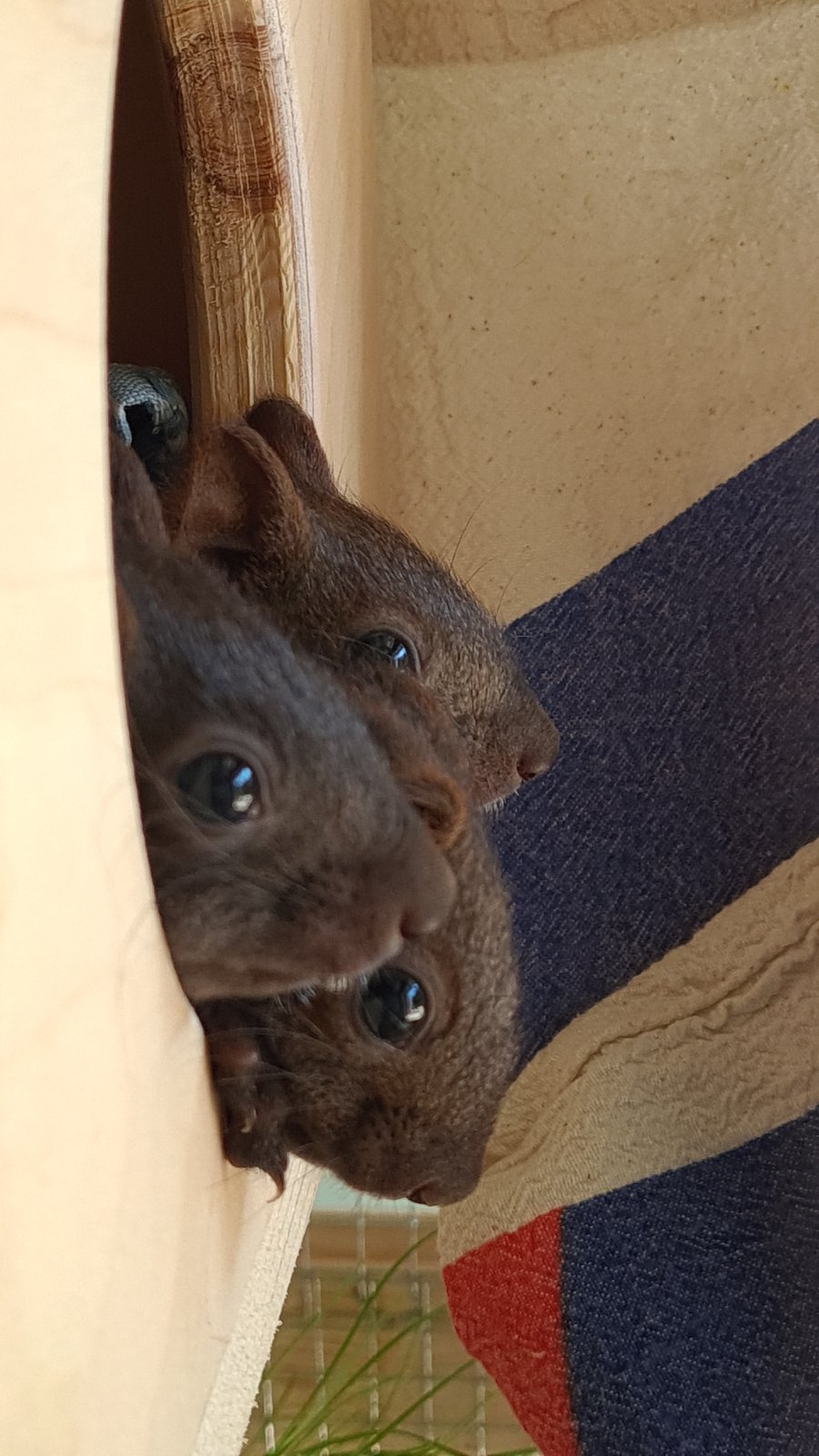
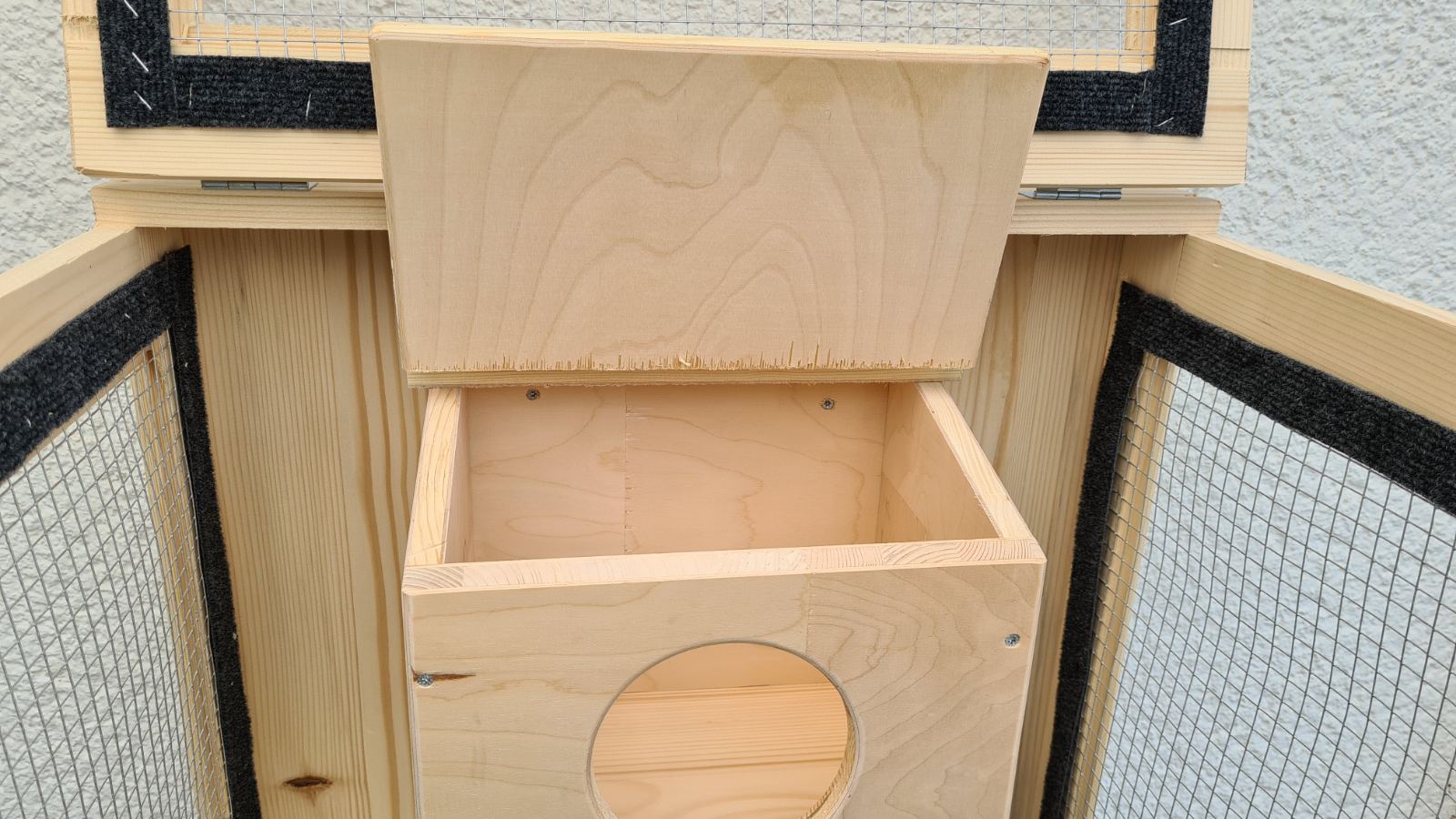
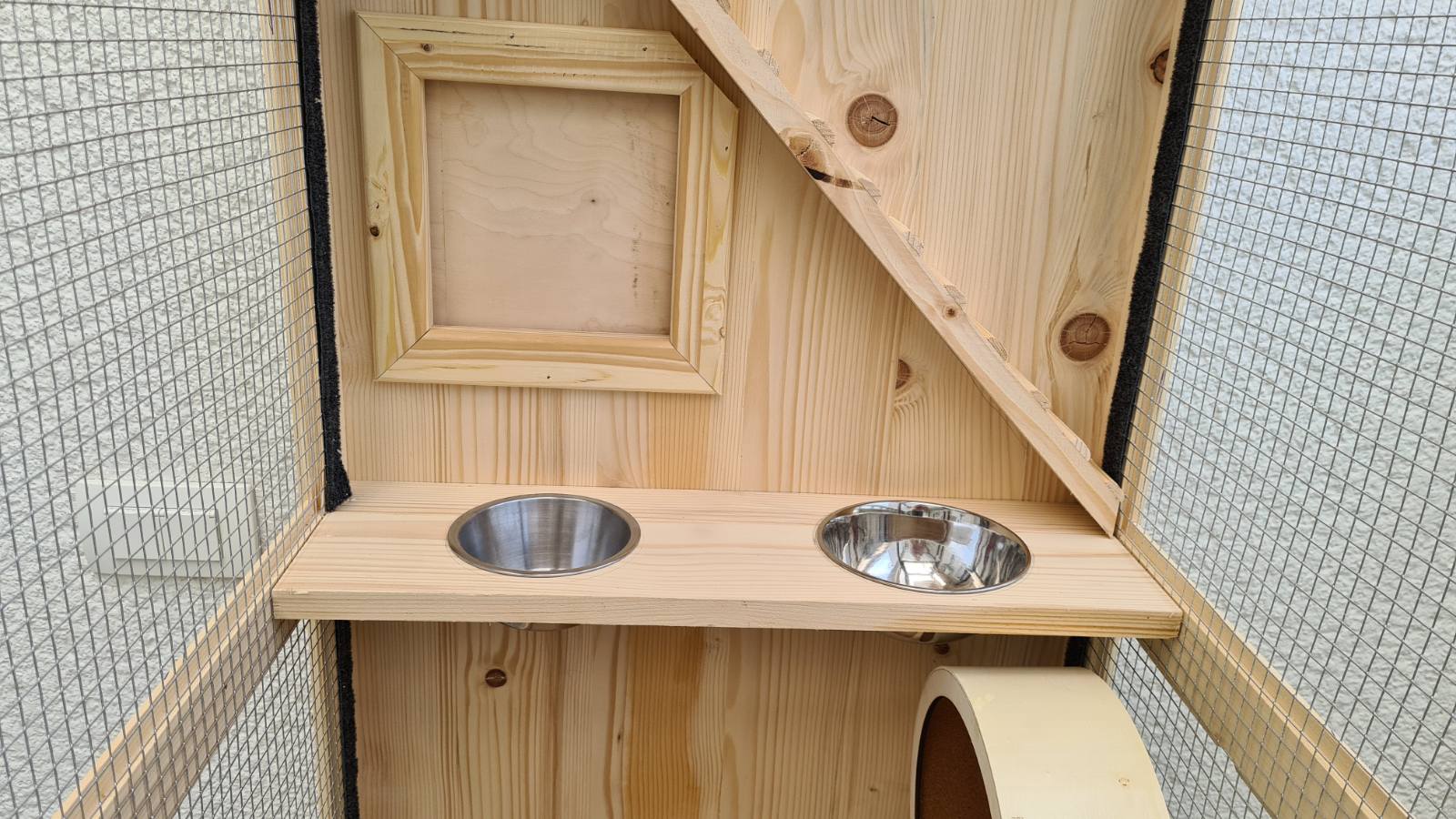
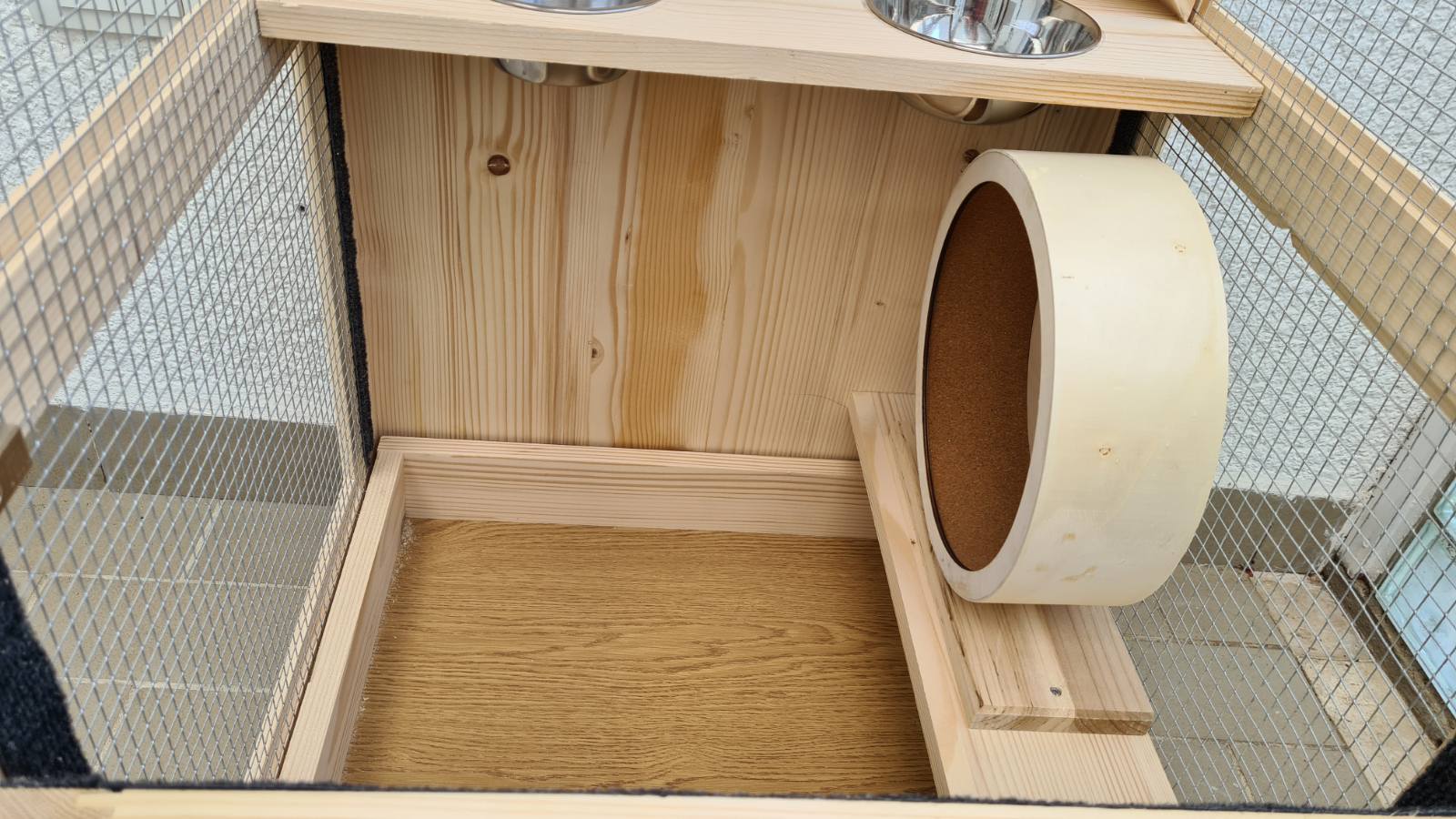
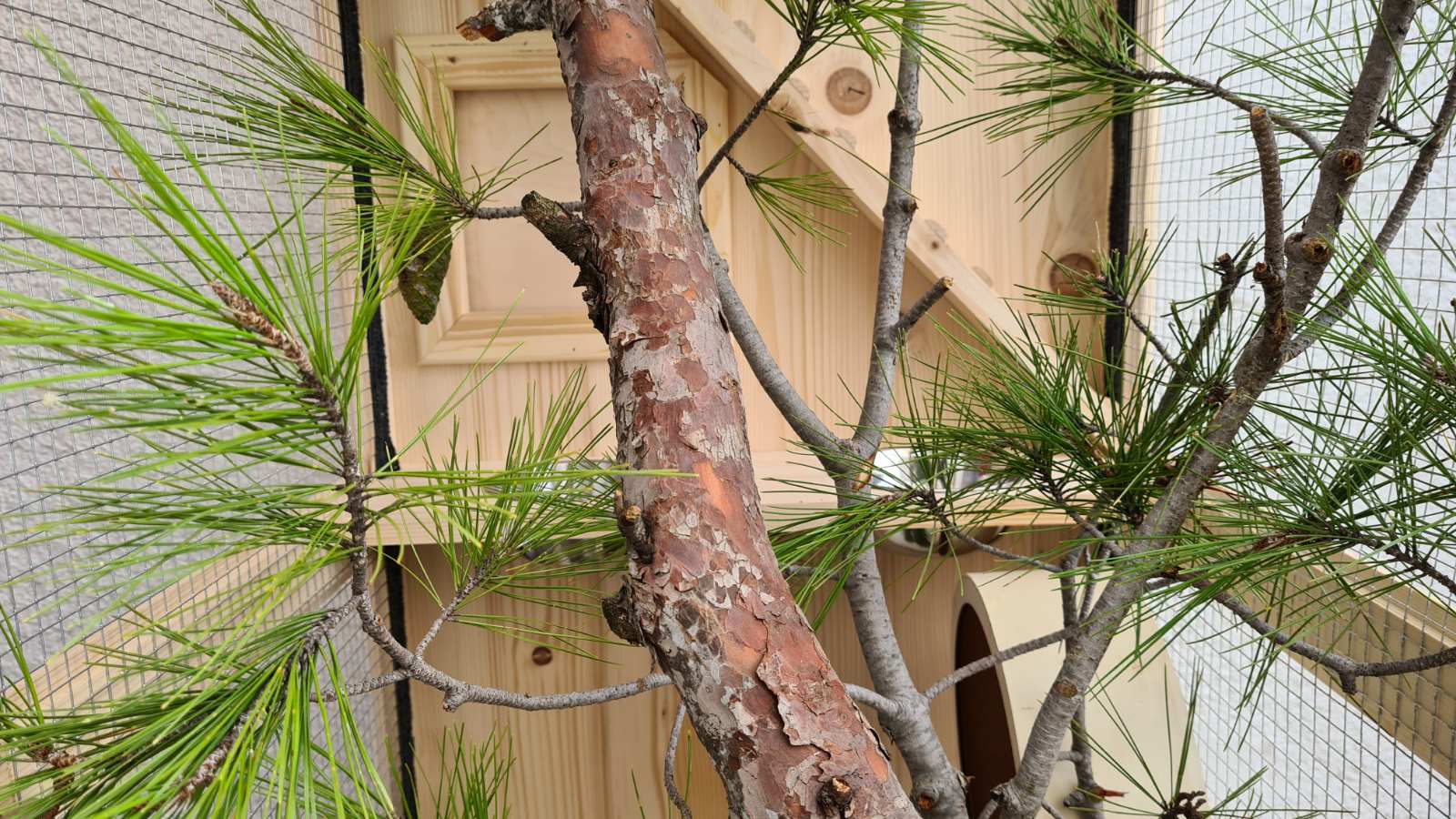
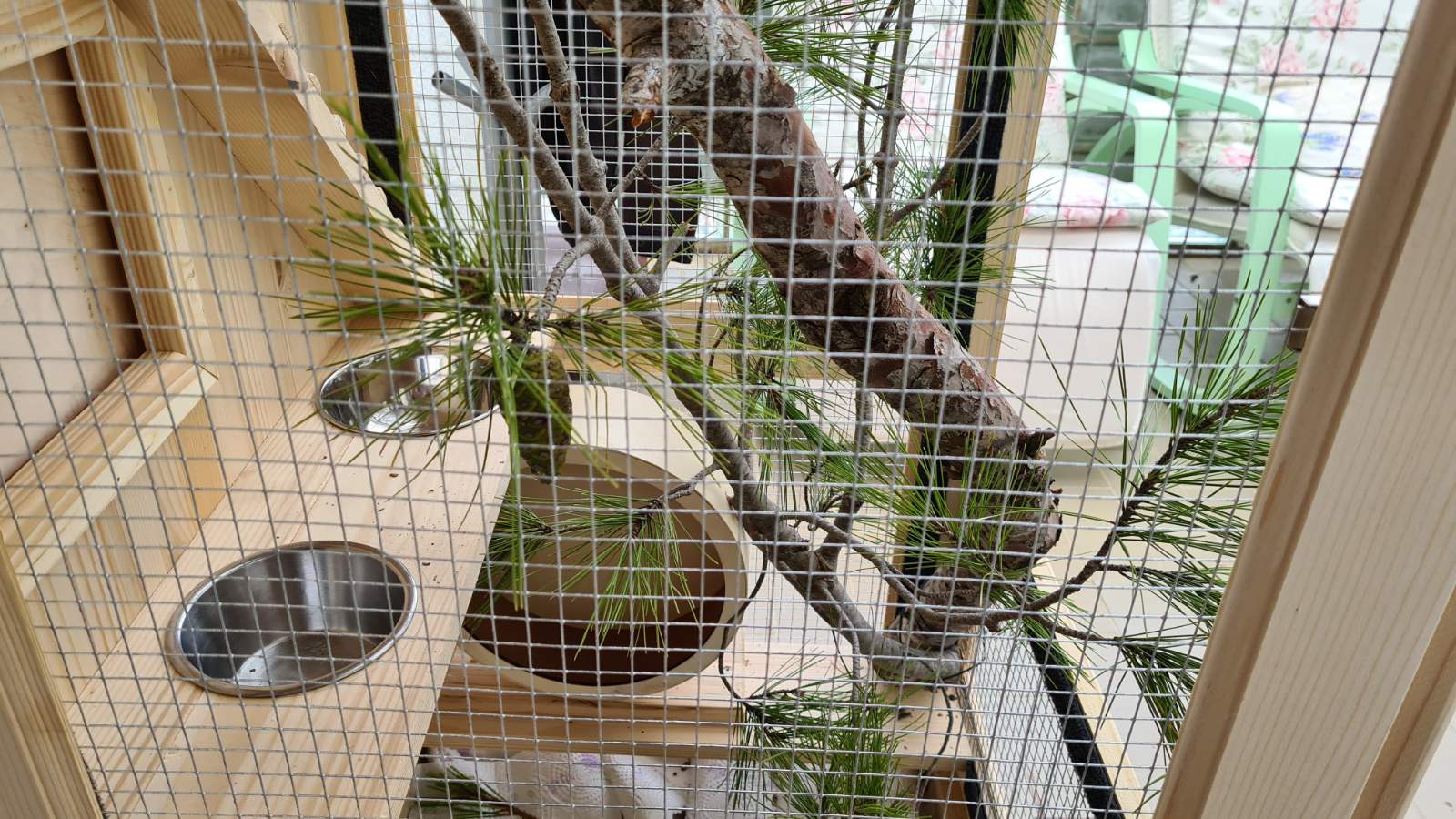
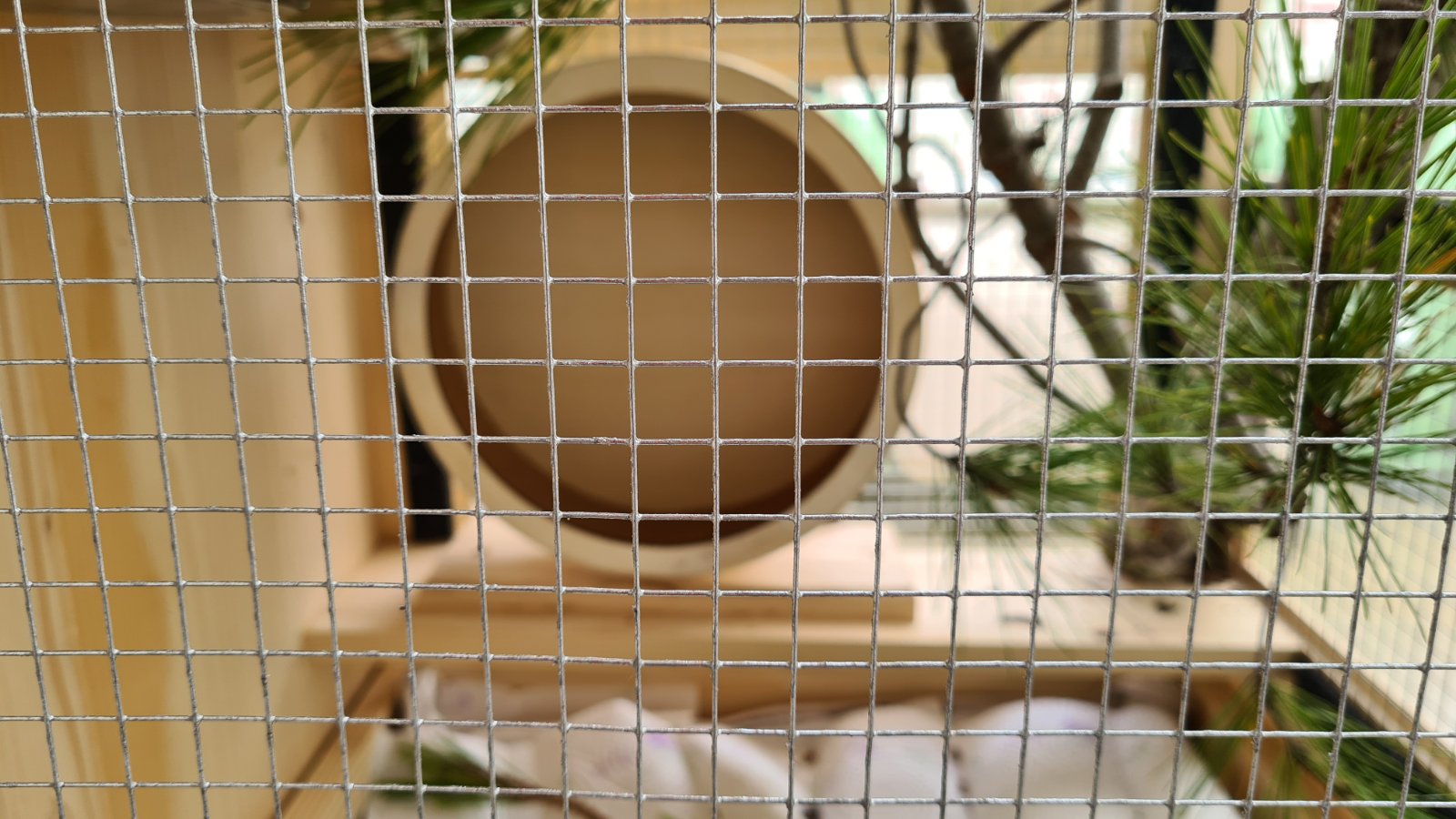
Larger Cage for Older Squirrels (after 7 weeks old): After 7 weeks, squirrels should be moved to an even larger cage that provides more space for activities and play. The recommended cage size is L70-80 cm x W55-60 cm x H150-180 cm. This cage should have multiple levels and include various elements for entertainment and exercise. These include a wooden hamster wheel (30cm in diameter) at the bottom of the cage, a rodent water bottle, two food dishes built into shelves (one for nuts and seeds, the other for fruits and vegetables), shelves, perches, ladders, branches, a wooden house with a round hole, and a hanging cloth bag for sleeping. The bottom of the cage should have a pull-out tray for easy cleaning, lined with a towel covered with paper towels or wood shavings, but not sawdust. The cage with squirrels should be taken outside in the morning and evening to ensure they get the vitamin D necessary for bone development. They can be kept outside in the shade for longer periods during the day if the weather is nice and they are safe from predators like cats. Check the pictures and videos at the end of the text to see an example of a cage.
Outdoor Big Cage-Aviary (after 10 weeks old): At 10 weeks, squirrels can be moved to a larger outdoor big cage with dimensions approximately L300 cm x W300 cm x H180-200 cm. This cage should include a nesting box, plenty of branches and ropes for climbing and playing, food dishes, a rodent water bottle, and a larger container with soil for squirrels to "bury" their food. The cage floor should be lined with wood shavings (not sawdust), which are more durable and do not require frequent changes, or fresh hay, which needs to be changed often. The cage should have a roof to protect them from rain. The cage is kept outside to help squirrels adapt to the outdoor temperature before releasing them back into the wild.
Preparation for Release into Nature (around 14-16 weeks old): Around 14-16 weeks, squirrels are usually ready to be released back into the wild. Before releasing them, ensure they are prepared for independent living and have adapted to natural conditions. You can read more about how, where, and when to release squirrels into nature HERE.
Properly adapted cages are crucial for the successful rehabilitation of squirrels. By following these guidelines, you can provide a safe and stimulating space for their recovery and preparation for return to the wild.
Additional Cage Maintenance Instructions
Avoid Chemicals and Perfumes: Never use disinfectant chemicals or scented detergents to clean the cage. Squirrels are highly sensitive to smells, and such products could cause discomfort or stress. Clean the cage with a mild unscented detergent or simply water.
Sleeping House: Do not touch or move the box and bag where squirrels sleep unless necessary. This is their safe and comfortable place where they feel protected. Avoid any disruption of this space to allow them peaceful rest.
Replacing Wood Shavings: Replace the wood shavings at the bottom of the cage approximately once a month or as needed. Maintaining a clean substrate helps preserve the hygiene and health of the squirrels.
Natural Scent: Squirrels have their natural scent, which is important for their communication and identification. Do not try to alter this natural scent with perfumes, deodorants, or other scented products. Do not bathe squirrels. Preserving their natural environment contributes to their well-being. Do not bathe squirrels.
Proper care and maintenance of the natural environment for squirrels in cages are crucial for their successful recovery and preparation for return to the wild. Adhering to these guidelines helps create a safe and suitable environment for these wild animals.
ABOUT US
HEALTH CENTER HARMONY
Association for the Protection of Health,
Nature and Red Squirrels
POREČ - ISTRIA
We have been active since 2006.
© Health Center Harmony 2006-2026
NOTE: All information provided on this page is educational. For specific needs concerning squirrels, please consult a veterinarian or a wildlife protection center.
95% of the photos are taken by Conny & Dražen, with the remaining images by Graziella Mureta and Geert Weggen and licensed photos from Pixabay, Stock, and Shutterstock.